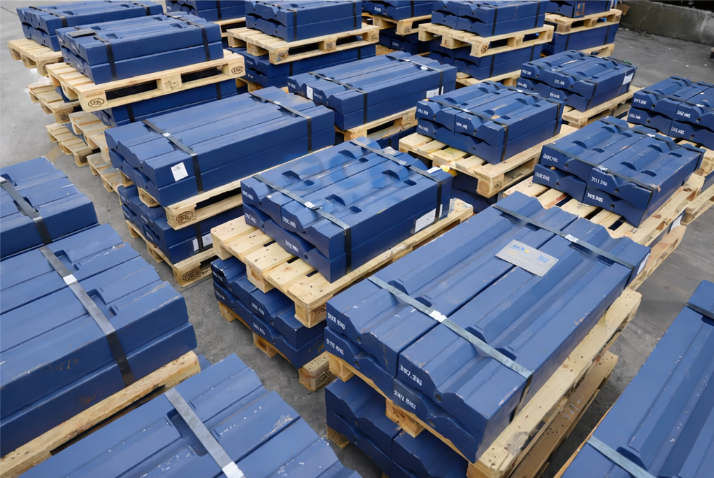
How to Select the Right Blow Bar Material for a Mobile Impact Crusher
Selecting the correct blow bar(hammer) material is critical to achieving optimal performance, long service life, and low operating costs for a mobile impact crusher . Different materials behave very differently depending on feed material, application, and operating conditions.
Below are the key considerations and common blow bar material options to help you make the right choice.
1. Understand
Your Material Characteristics
Before selecting a blow bar, evaluate the following factors:
· Material
hardness – Harder rock requires higher wear resistance
· Abrasiveness – High quartz
content increases wear rate
· Impact load – Large feed
size and heavy impact require higher toughness
· Moisture content – Wet or sticky
material can accelerate wear and clogging
Correct material matching is essential to balance wear life and impact resistance.
2. Common Blow
Bar Materials and Applications
▲ Manganese Steel Best for: High-impact applications
Typical
applications: Large feed size, demolition waste, mixed materials
(Not
ideal for highly abrasive applications)
▲ Martensitic Alloy Steel Best for: Medium-hard materials with moderate impact
Typical applications: Limestone, recycled asphalt, mixed aggregates
▲ High Chromium Cast Iron Best for: Hard and abrasive materials
Typical applications: Granite, basalt, hard limestone, concrete recycling
▲ Martensitic With Ceramic Insert Best
for: Medium-hard materials with moderate impact at least twice lifetime than Martensitic without ceramic.
Typical
applications: Limestone, recycled asphalt, mixed aggregates
▲ High Chrome With Ceramic Insert Best
for: Extremely abrasive materials with stable feed, at least twice lifetime than Chrome without ceramic.
Typical applications: Hard rock crushing with consistent feed size, Small feed size, Limestone, recycled asphalt.
3. Operating Conditions Matter
· Wet or sticky
material: Choose materials with smooth wear surfaces
· High throughput
demand: Prioritize wear life and consistency
· Frequent
material change: High chrome or martensitic options offer flexibility
Proper rotor speed, feed control, and correct crusher setup are equally important to maximize blow bar performance.
4. Cost vs.
Performance
The cheapest blow bar is rarely the most economical.
A well-selected material can:
· Reduce downtime
· Lower replacement frequency
· Improve overall crushing efficiency
Always consider cost per ton, not just purchase price.
📞 Contact Greentrack for professional guidance and
customized wear part solutions for your mobile impact crusher.